Friday, 21 May 2010

Latest Pictures

I'm still quite new to serious birding. If I've misnamed or incorrectly identified any of the birds in this blog, please let me know in the comments at the bottom of the appropriate post - thanks.

A Starling in my back garden

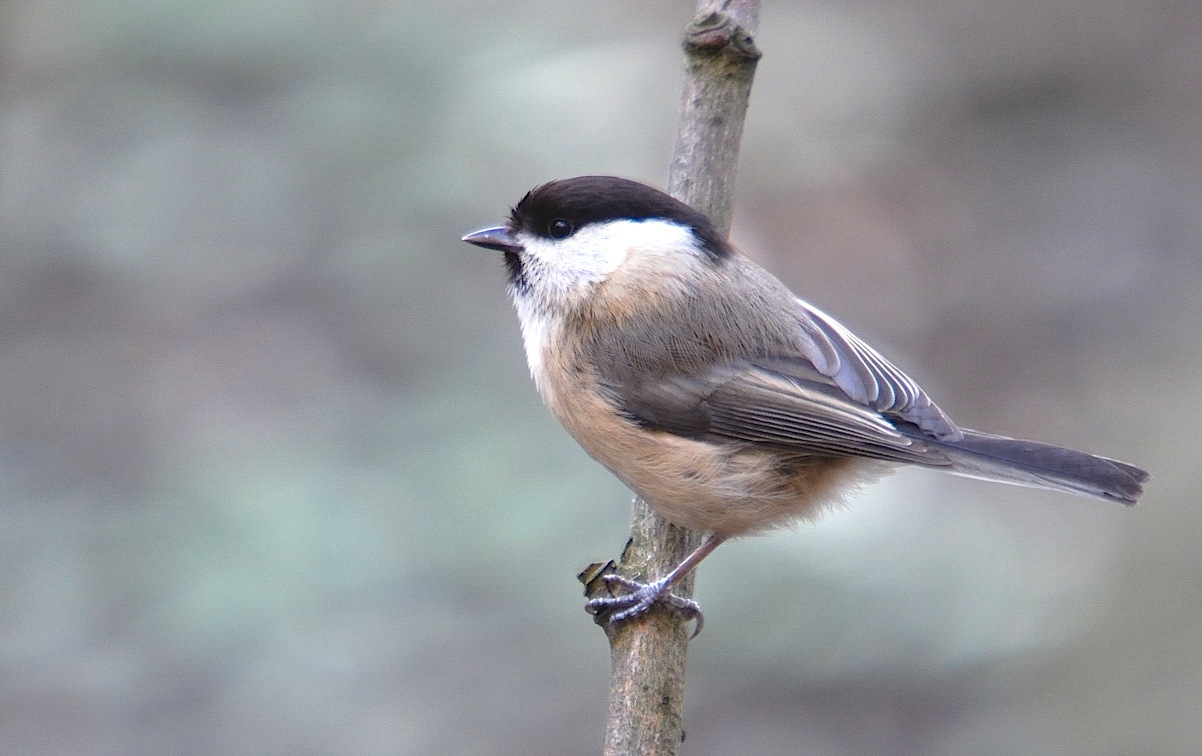
A Willow Tit at Pennington Flash

A Chaffinch singing down Rindle Road

A female Blackbird with a meal for her young

A Sparrow at the bottom of my garden

A Dunnock at Pennington Flash

A Mute Swan on its nest in the canal near Moses Gate

Great Tit at Pennington Flash

Young Blackbird training for the World Cup

Dunnock on a Neighbour's Roof

Sunday, 16 May 2010

Renamed Blog

I've decided to rename this blog as I'm starting to write more about my birding days out and the people I meet, rather than just to show my pictures. Links will need updating in various places to reflect this, so please bear with me if anything is not working yet.

Sunday, 9 May 2010

Rindle Road and Astley Moss


After a short break in my birding activities (whilst I erected a garden shed), I decided to start off tonight by looking down Moss Lane first and I wasn't disappointed. As I made my way up the lane in my car I came across a Red Legged Partridge which took a sudden turn into the excavations of the new pipeline workings on the northern side. I parked up and followed it for a short while when another appeared, and when they spotted me taking photos, both ran off across the field.

Then I tried taking photos of some Lapwing diving down into the fields but without much success - as you can see by the blur, I'm still getting to grips with taking pictures of moving birds. So I drove a little further down to the trees near the bend in the road just before the lane ends. There was nothing much showing down here and so I slowly crawled back along with my windows wound down. Soon I could hear a bird calling from the trees and so I headed in that direction - I was amazed to find it was a Little Owl, the first time I've ever seen an owl in the wild.  The pcture below shows my first view of the bird, and no, it as not been distorted! The owl really did look as squat as that!

I was so excited I just fired off a load of shots on automatic, without paying too much attention to the settings - I didn't want the bird to fly off without me having any record of it. What I find quite unbelieveable about these pictures is that they are of the same bird. The differences in colour are due to the light, camera settings and post processing.


The next time I looked up the owl had gone, and after a quick search failed to find it I moved on down the lane. I parked up again in a small side lane next to wooded area with very thin birch trees which were all gently swaying in the breeze - the effect was quite mesmeric. I thought I caught a glance of something unusual in a tree but it now looks most likely to be a mistle thrush.

After spending ten minutes here I moved down to the layby at the end of Rindle Road just before the level crossing. Once parked up, I scanned the horse paddock and adjacent field from the metal gate, looking for the Whimbrel which are frequently reported here. Sure enough, there they were, but too far off to take even a half decent photo - I'll need to come back for that one.

Whilst I was there I met Phil Owen and his mate Steve who asked me if I'd seen the Whimbrel. For once I could be of some help, but I very quickly explained that I was still a novice birder. We had quite a long debate about whether or not it was a Mistle Thrush sitting on a fence post fairly close to the Whimbrel - we eventually decided it was after looking through Phil's scope.

I then offered to show Phil and Steve around Rindle Wood and the edge of the SSSI as they weren't sure exactly where it was. Like me, they were interested in finding the Ring Ouzel which had been seen here many times in the last few weeks.  I did my best to explain each area where different birds had been seen, all from what Dave Thacker and others have told me and from reading Ian McKerchar's site information on manchesterbirding.com.

In the ploughed field we saw some Yellowhammer and a small bird which again was debated about for a while before Phil and Steve decided it was definitely a Whinchat.  And all the time we could hear a Cuckoo calling from trees behind the SSSI.  Not only that, there was a birder stalking it too. As we moved on in search of the Ring Ouzel, the Cuckoo calling got louder and so we stopped.  It was then that we saw our first glimpses of the bird sitting in the distant trees.  We decided to walk back for a better look and hopefully try for some photographs.

The next few minutes were brilliant because we were treated to a fly-past by two Cuckoos, one of which landed in some vegetation directly opposite us. It was here that I managed to get my first identifiable image of the bird. Still a long way to go on that front!

As we marvelled at the Cuckoos, the stalking birder came across from the SSSI and greeted us. He turned out be Denis Atherton who had spent a few hours trying to get a good view and a picture of the cuckoo.  We chatted for a while and pointed out the Whinchat which he hadn't seen. Denis later e-mailed this cracking picture of a cuckoo sitting on the Astley Moss SSSI sign.  It may be a little blurred, but that's really not the point, is it?

Now I must really try to get one of my own!

On the way round the ploughed fields and back to the road we saw a distant Buzzard over the railway line.


And a solitary Wheatear in the ploughed field near Rindle Cottages.


No sign of the male Ring Ouzel anywhere though - shame, he must have moved on.

Sunday, 25 April 2010

Rindle Road and Astley Moss

After reading about it on the Manchester Birding website and forum, I decided to go and have a look down Rindle Road in the Astley Moss area. I was already quite familiar with the area, having lived less than 10 minutes away for the last 26 years, but not from a birding point of view.

I was very pleasantly surprised when I had barely turned the corner at the bottom of Rindle Road and saw two Whimbrel in the first field past the farms. And as I was watching them though my binoculars I heard a cuckoo calling from the field behind me. Things were already looking good.

It was here that I first met Dave Thacker, who confirmed that the birds were Whimbrel as I'd thought although there also seemed to be a Curlew calling somewhere in the distance too. Dave gave me lost of good advice and information about birding in this area - he's been coming here since he was a kid and seems to think of it as his backyard or garden. He also mentioned the Manchester Birding forum which I had already started using a couple of months ago.

That evening I went on to see some Mistle Thrush, Lapwing and a Heron in the fields on either side of the road. What a good start to my burgeoning relationship with this area!

Saturday, 24 April 2010

Pennington Flash

I went out in the early morning sunshine to Pennington Flash today as I'd been told it was best at this time of day when few people are about and the light is good. I got there before the car parking meter had been unlocked from its vandal proof cover and so was left in a bit of a quandary as they are very keen here and I wouldn't be back for a few hours. I decided to leave my £1 coin in view on the dashboard so any meter wardens could see that I had tried to pay.

Loaded with a recently acquired 50-500mm Sigma 'Bigma' lens for my Nikon D90, I set off for Horrocks Hide first today when normally I start with Teal Hide, the furthest from the car park.

I was quite surprised but actually pleased that there was no-one else in Horrocks Hide, as this would let me set up my new equipment without looking like a total novice to experienced birders. After I'd clamped the scope to the hide shelf, I soon spotted the following species of seabirds, waders and waterfowl:
  • Great Crested Grebe (my personal favourite water bird)
  • Little Ringed Plover
  • Black Tailed Godwit ( a first for me)
  • Redshank
  • Oystercatcher
  • Lapwing
  • Cormorant
  • Blackheaded and other gulls
  • Canada Goose
  • Moorhen
  • Coot
I took loads of pictures of a solitary Great Crested Grebe which was circling around a pair of stones in the water very close to the hide. I recognised these stones from the pictures of other birders - the Grebes use them in their famous mating rituals, well the last part anyway. This was as close as I've ever got to these birds and because the light was just right for taking photos, I spent a long time on this subject. I'm still not sure my secondhand Bigma lens is as sharp as it should be, so I tried every setting I could think of to see if I got just one really sharp one - I'll let you know when I've finished processing the few hundred snaps I took!

After ten minutes or so I was joined by a few more experienced birders who pointed out some Common Terns on a buoy in the middle of the Flash - I'd never have spotted these on my own. I was also told that there was a newish hide (Ramsdales) that I'd not been to before and someone else also mentioned that they'd seen a Ruddy Duck at Pengy's Hide, so I thought I'd do both of these later.
It was here that I was introduced to John Taverner and his beast of a lens - he has a Nikkor 500mm prime which fills an entire rucksack on its own! I now understand what John Tymon meant when he said I'd recognise him as being the one 'on his knees'! John showed me some pictures of Wheatear he'd taken here last night using this lens with a Nikon 300s and 1.7x teleconverter. Ah, I can only dream of equipment like that at present.

From Horrocks Hide I set off for Pengy's Hide in search of the Ruddy Duck and perhaps a Kingfisher sitting on the post put there by John Tymon. There was not much about when I got there and so I moved on to Bunting Hide which was shut - oh yes, it was still quite early in the morning. So then I moved off to Lapwing Hide where there was absolutely nothing about and so onto Teal Hide, where again there was very little apart from a pair of Shoveler some Little Ringed Plover and the other more usual suspects.

So, after I good start, things were going downhill in terms of numbers of species to see. After a quick chat with one of the wardens at Teal Hide, I went back to Lapwing Hide (still nothing) and met her again in Bunting Hide where she was putting out the wild bird food.

After another chat I returned to Pengy's Hide to look for the Ruddy Duck - this time I was in luck. There were some Great Crested Grebes in the distant reeds as well as some Mute Swans and Canada Geese. A few Moorhen and Coot were also around and then I spotted some thing I didn't recognise - after a quick look on my RSPB identification program on my PDA phone I decided it was a female Ruddy Duck, but it was too far off for getting decent photos, even with a 500mm lens.

My expectations of what would be possible with this sort of lens are slowly diminishing - it seems that there's no substitute for getting physically close to the subject and I'm just going to have to find some good places to do this. I sat in the hide taking pictures just for my identification record, knowing they wouldn't be that great to look at.


After a short while another duck appeared in the reeds a little closer to the hide. I could see it's distinctive blue beak and so I knew this was the male Ruddy Duck. It was soon joined by the female and a Grebe that was following it. I managed to get a few photos of the pair being harassed by the Grebe before they both shot off across the water back into the distant reeds. Well at least I saw it. By the way, While I was waiting for the Ruddy Duck to appear think I might seen a new species sitting on a bulrush - I managed to get a picture of it (below) and if it actually is new, I'd like to name it Fluffy Duck.

From Pengy's Hide went round the corner to Edmonson Hide, where there were a number of Tufted Duck pairs as well as few Coot and Moorhen. Here I met someone who said he'd seen (or heard) Sedge Warbler but not much else. When I mentioned that I'd just seen a Ruddy Duck he said something about them being shot, which I didn't quite understand at the time.

I later found out more about the Ruddy Duck problem and the culling issue when I mentioned it to John Tymon, who had been so annoyed about it that he said he'd left the RSPB and who still feels strongly that a mistake has been made. Read more about it here.

I didn't stay long at Edmonson Hide and was soon off looking for the newish Ramsdale's Hide which I hadn't been to before. I wasn't disappointed when I go there - a grey heron was right in front of the viewing windows and the closest I've ever been to one.

I took loads of photos, although, as John Taverner had mentioned earlier today, the light was starting to come from a bad direction. I'll need to get here earlier next time.

I also spotted some Gadwall, Shellduck, Blackheaded Gulls, Lapwing, Moorhen and Coot, but spent most time photographing the Heron. I made the classic beginners mistake of taking my eye off the bird to adjust the camera settings, when it flew off and I missed the chance of a flight shot.

From Ramsdales Hide I walked on to Ramsdales Ruck as I never been round here before - this is where the Wheatear had been seen last night so I thought there was a chance it might still be there - no chance. However all was not lost as I soon saw a Kestrel hovering and then diving to the ground. When it surfaced it sat on a fence post long enough for me to get my camera out and attempt a couple of photographs. The Kestrel had caught a frog and as it flew overhead I could see its legs dangling from the bird's claws - my picture was however, rubbish! Here are the best two which, although they are a little blurred, have something about them I quite like.

I also saw three Common Terns diving into the canal above me and making their familiar screeching noise, which I'd first heard on Anglesey last year. Again the pictures I took were all blurred as the birds were moving quickly overhead. As I carried on round the Ruck I could hear a Skylark singing way up high and I saw it drop quickly to the ground and disappear in the long grass. As I've already said, I've never been around this side of the Flash before and I'll definitely be coming back sometime soon. After taking a few pictures of the Flash from this side and some more of a Great Crested Grebe bobbing up and down on the choppy water, I decided it was time to head back.

I returned to Horrocks Hide after a couple of hours of walking round the various pools and scrapes. Here I met up with John Tymon who kindly set up my camera the way he uses his D90 as well giving me some more useful tips. Using these settings I took a few more pictures of the Redshank as well as some of the Common Sandpiper, which was another first for me. I also spotted two Common Terns now basking in the sunshine on the spit as well as another on a nearby post. Finally, I saw a pair of Teal and some Gadwall which had joined the main gathering.

Just before I returned home I popped back into the feeding station at Bunting Hide to see if there was any more activity. I took some pictures using John T's settings but surprisingly there was still not much going on here today. They must have gone on holiday. The only thing new of any notes since my last visit was the Blue Tit nesting in the post hole.

I think you can see from this one blog post why Pennington Flash is one the UK's premier birding sites - what a lot of variety in a relatively small place and today was a bad day for species numbers!

Sunday, 28 February 2010

A Successful Morning at Pennington Flash

Yesterday I went out to Pennington Flash with my new hide clamp for my spotting scope and camera. It was a revelation to see how much better the clamp made my scope - I could now see clearly without my eyelashes getting in the way and without needing to hold the scope still on a flimsy tripod. I would thoroughly recommend a decent hide clamp to everyone - it makes your other equipment seem much better.

At Horrocks Hide I spotted and positvely identified the following ducks and birds:

  • Teal (two Male and Female pairs)
  • Goosander
  • Goldenye (two Male and Female pairs)
  • Tufted Duck (Male and Female)
  • Great Crested Grebe
  • Grey Heron
  • Mallard (Male and Female pairs)
  • Canada Goose
  • Moorhen
  • Coot
  • Redshank (a single Male and Female pair)
  • Cormorant
  • Lapwing (Peewit)
  • Black Headed Gull
  • Mute Swan
From Pengy's Hide I spotted:
  • Shoveler (Male and Female)
  • Gadwall
  • Coot
  • Moorhen
  • Tufted Duck (Male and Female)
From Lapwing Hide I saw:
  • Tufted Duck
  • Gadwall
  • Coot
And from Bunting Hide (the Feeding Station) I saw:
  • Bullfinch
  • Robin
  • Blackbird
  • Blue Tit
  • Coal Tit
  • Willow Tit
  • Long Tailed Tit
  • Corn Bunting
  • Greenfinch
  • Chaffinch
  • Dunnock
  • Magpie
  • Stock Dove
  • Moorhen
... and a lone rat!

Thanks to all those anonymous birdwatchers who helped me spot and identify the Redshank, Goldeneye and Gadwall which I'd not previously seen here before.

Thursday, 11 February 2010

Two Skylarks


Double-click the picture to enlarge it.


Here's an action picture of two skylarks 'larking about'! I took this while geocaching at Cow Hill just of Plodder Lane in Farnworth, Bolton. First of all I could hear the birds way up in the sky singing their characteristic song, but I couldn't see them. Then I saw them diving to the ground, before eventually landing and walking about in the grass.

After a while they'd ascend almost vertically (the Lark ascending) way up high to become almost invisible again before repeating the dive again. It was a great sight on a beautifully sunny February day.

Species: Skylark
Date: February 2010
Location: Cow Hill, Bolton, Lancashire

Wednesday, 10 February 2010

Collared Doves


Double-click the picture to enlarge it.

Collared doves always seems to go around all 'lovey dovey' in pairs - ah, ain't that sweet?


Species: Collared Dove
Date: 30 January 2010
Location: Pennington Flash, Leigh, Lancashire


Pheasant


Double-click the picture to enlarge it

 
It was quite a surprise to see this pheasant turn up in the Bunting Hide.


Species: Pheasant
Date: 30 January 2010
Location: Pennington Flash, Leigh, Lancashire

Greenfinch


Double-click the picture to enlarge it.


Looks more yellow than green to me!


Double-click the picture to enlarge it.


Species: Greenfinch
Date: 30 January 2010
Location: Pennington Flash, Leigh, Lancashire

Chaffinch

This is a male chaffinch:


Double-click the picture to enlarge it.

But are these females ?


Species: Chaffinch
Date: 30 January 2010
Location: Pennington Flash, Leigh, Lancashire

Great Spotted Woodpecker

I really wasn't expecting to see a Greater Spotted Woodpecker here.


Species: Greater Spotted Woodpecker
Date: 30 January 2010
Location: Pennington Flash, Leigh, Lancashire
.

Blue Tit


Double-click the picture to enlarge it.


Species: Blue Tit
Date: 30 January 2010
Location: Pennington Flash, Leigh, Lancashire

Dunnock


Double-click the picture to enlarge it.

The Dunnock used to be called the Hedge Sparrow and it's easy to see why. They can easily be mistaken for sparrows.


Double-click the picture to enlarge it.


Species: Dunnock
Date: 30 January 2010
Location: Pennington Flash, Leigh, Lancashire

Bullfinch


Double-click the picture to enlarge it.


I can't believe how colourful the male Bullfinches are.


Double-click the picture to enlarge it.


Species: Bullfinch
Date: 30 January 2010
Location: Pennington Flash, Leigh, Lancashire

Song Thrush or Mistle Thrush?


Species: Thrush
Date: 30 January 2010
Location: Pennington Flash, Leigh, Lancashire