

An online birding diary, photo album and scrapbook - it's not much but it keeps me amused
Showing posts with label Willow Tit. Show all posts
Showing posts with label Willow Tit. Show all posts
Wednesday, 19 October 2022

Wednesday, 3 February 2016
Fab Four at Pennington Flash
 |
| Willow Tit |
I decided to stay local today and visit Pennington Flash in the hope of seeing the recent Redpolls and Siskins that have been showing so well. I parked at the first car park so that I could wander up the East Bay side of the Flash and as I approached the location of what I formerly named 'John Taverner's Stump' after a local bird photographer who used to feed the birds there, I could see a bird photographer already set up there.
 |
| Blue Tit |
It turned out to be Ian Greenhalgh who is an expert naturalist and bird photographer and he kindly allowed me to photograph the birds which were coming to his home made perches and feeding trays.
 |
| Robin |
Ian had set up the perches to be in perfect light with no distracting backgrounds and he talked me through the routines he uses to encourage the birds on to the perch where the camera is prefocussed. The main target birds here were Willow Tits, although there were also Blue Tits, Great Tits and a Robin coming to the food.
 |
| Great Tit |
So all I had to do was click my shutter button because Ian had set it all up ready to go, and these are the shots I took. I never did get to see the Redpolls and Siskins as I spent so much time chatting to Ian. But I did learn a lot from him and for that I am most grateful.
Wednesday, 6 January 2016
Lesser Redpoll at the Wigan Flashes
Today was my birthday and I decided to go to one of my less-frequented local sites, the Wigan Flashes. My target birds for today wer the Lesser Redpolls which had been sighted regularly at the Hawkley Hall feeding station over the last few days, although I did hope to see a few other birds too.


Wednesday, 27 March 2013
Jon Taverner's Stump
Jon Taverner is a local bird photographer who lives within walking distance of Pennington Flash, and so that is where you will usually find him, especially on sunny days. He has been seeding a particular tree stump at Penny which is very good for photos of Willow Tits, Robins, Blue Tits, Great Tits and Coal Tits - consequently I now call this place 'John Taverner's Stump'.
As you can see from some of these photographs, the light can be very good here and the habitat and backgrounds are perfect for some 'classic' shots. It's possible to hide the seed so that it can't be seen on the photographs and there are some very interesting nooks and crannies for the birds to investigate.
Here's a few examples of the sort of shots you can get here:
In addition to the tree stump, Jon also feeds the waterfowl in the nearby channel, and recently it has been possible to get some really good shots of a pair of male and female Goosander, which will often come very close to the bank for bread. Some photos will follow soon.
My BirdGuides Gallery
As you can see from some of these photographs, the light can be very good here and the habitat and backgrounds are perfect for some 'classic' shots. It's possible to hide the seed so that it can't be seen on the photographs and there are some very interesting nooks and crannies for the birds to investigate.
Here's a few examples of the sort of shots you can get here:
 |
| Willow Tit |
 |
| Great Tit |
 |
| Robin |
 |
| Blue Tit |
 |
| Coal Tit |
My BirdGuides Gallery
Sunday, 14 October 2012
BATH - Pennington Flash Fieldtrip
Today's 'Birds and their Habitats' (BATH) session was a fieldtrip to Pennington Flash in Leigh. It was a pretty awful day for going out and about, but that didn't deter the intrepid birders from the Whitefield class. Today we were joined by Barbara from the Ramsbottom class making a total of 12 birders plus Peter.


Some 35 species - not bad for a dull and wet Thursday afternoon.

We got to Pennington Flash at 1:30pm and waited on the car park for everyone to arrive. This area of the Flash is normally very popular with families who feed the ducks, swans and other birds here and this has caused them to amass in great numbers here.
Amongst the flocks there were Canada Geese, Mallard, Mute Swans, Black-headed Gulls and a large single resident Muscovy Duck (presumably a farmyard bird or escapee) which to me looks more like a goose than a duck. There was also a small group of Moorhens on the grassy area to the left of the car park and many Coot in the water.
Amongst the flocks there were Canada Geese, Mallard, Mute Swans, Black-headed Gulls and a large single resident Muscovy Duck (presumably a farmyard bird or escapee) which to me looks more like a goose than a duck. There was also a small group of Moorhens on the grassy area to the left of the car park and many Coot in the water.
 |
Willow Tit at Bunting Hide, Pennington Flash (Martyn Jones)
|
Peter decided to go to Bunting Hide first of all as it has been closing early on some days due to staffing problems and we didn't want to miss it. Bunting Hide is a feeding station and therefore you are nearly always guaranteed a good number and variety of birds there. One of the specialities here is the Willow Tit, a bird that we have recently been discussing in the class and some people come quite a long way to see them here.
Here's a photograph of a Willow Tit that I took here on a previous visit.
Other birds of note here are the very brightly coloured male Bullfinches, of which only one was seen today - but it did look very smart with it's newly developed plumage after the summer moult. Sometimes there can 10 or 12 of these birds feeding here, along with the more subdued coloured females.
 |
Chaffinch at Bunting Hide
|
There are always a variety of titmice at Bunting Hide and today we saw Coal Tits, Great Tits and Blue Tits. There are also usually a few Long-tailed Tits here (although not strictly one of the titmice Paridae family) but none were seen today. Male and female Chaffinches were also present as well as a huge party of Greenfinches feeding in one of the cages - there were at least 12 of them and I've never seen so many here at once before. Finally there was a Robin, Stock Dove and Moorhen bringing the species count to 10 - not bad for a start!
 |
Greenfinch at Bunting Hide
|
From Bunting Hide we went on to Horrocks Hide, the largest and possibly best placed of all the other hides. On the way there we had a brief stop to look over the Flash where we saw a Great Crested Grebe, Tutfted Ducks, four or five Pochard in the distance and some Gulls standing on the coloured buoys. Peter pointed out that one of them was a Common Gull with yellowish-green legs and white 'mirrors' on it's wing tips but you really needed a spotting scope to see these features clearly. There were also both Great Black-backed and Lesser Black-backed Gulls on the other buoys.
Horrocks Hide overlooks a long thin strip of land known as 'The Spit', which is the remains of an old railway line that used to pass through this area. In recent weeks the Spit has disappeared altogether under the volume of water caused by the very heavy and frequent rainstorms, but today a fair amount of it was viewable even though the water levels are generally still quite high.
 |
A typical view of the end of 'The Spit' - Cormorants and Gulls
|

The Spit is often a great place to see waders, but today there were few if any about - even the normally present Lapwing were missing The Cormorant numbers are increasing once again after their absence in the summer and there were at least two white-bellied juveniles at the end of the Spit.
There were also a lot of Canada Geese present. In the pools there were Teal and Mallards, with a Great Crested Grebe in the distance. Perhaps the best bird to be seen today were four Common Snipe which were distant and very well camouflaged as they sat low amongst the vegetation at the far end of the Spit, only occasionally wading in to the water. To the right is a photograph I took of a Snipe here from earlier in the year:
 |
Grey Heron at Edmonson's
|
From Horrocks Hide we went on to Tom Edmonson's Hide and the first bird we saw there was a juvenile Grey Heron. The rain was starting to become very heavy by now so we were grateful for the shelter.
The shingle scrapes were all but under water and so there was little chance of any waders, but there were Gadwall, Teal and Mallard pairs feeding here as well as a single pair of the large-billed Shoveler. The drake was just coming out of eclipse and starting to regain it's colour. There was also a male Cuckoo! Wait ... did I say Cuckoo? Well it was actually Peter's excellent impression of a distant Cuckoo which he started up when I mentioned to Alan that I'd heard a Cuckoo here in the spring. I'm sure he's had many people fooled with that one before now!
 |
Little Grebe at Ramsdale's Hide
|
After the rain had died down a little, we decided to move on. En route to Ramsdale's Hide a blackbird flew across the path and we could hear Long-tailed Tits in the bushes. A member of the class was keen to see a Kingfisher here and it didn't disappoint, first by perching on a submerged post at the far end of the pool and then by flying fast and low across the water in a shimmering iridescent bue blur towards the left side of the hide. Also of note here was a Little Grebe that put in a brief appearance amongst the usuals of Coots and Mallards and some Lapwing were seen briefly overhead. Outside in the trees, more Long-tailed Tits could be heard and Peter said he could also make out a tiny Goldcrest from its call.
Our final call for the day was at Teal Hide, which is a short walk through the trees towards the Golf Course. On the way Peter stopped us to listen again for Long-tailed Tits and also Willow Tits, and there was also a Robin or two along the path. At Teal Hide the water level was very high and so there was little dry land for waders, as has been the case for most of this year. There were however, several pairs of Shovelers, some Gadwall and Coots and a Moorhen here. And then it was time to go home.
So in summary, here's a list of all the birds seen today:
Great Crested Grebe
|
Great Black-backed Gull
|
Lesser Black-backed Gull
|
Black-headed Gull
|
Mallard
|
Moorhen
|
Common Gull
|
Canada Goose
|
Coot
|
Tufted Duck
|
Willow Tit
|
Coal Tit
|
Great Tit
|
Greenfinch
|
Blue Tit
|
Chaffinch
|
Stock Dove
|
Robin
|
Magpie
|
Blackbird
|
Grey Heron
|
Shoveler
|
Teal
|
Gadwall
|
Mute Swan
|
Snipe
|
Cormorant
|
Kingfisher
|
Goldcrest (heard)
|
Long-tailed Tit (heard)
|
Little Grebe
|
Pochard
|
Muscovy Duck (farmyard)
|
Nuthatch
|
Lapwing
|
Cuckoo (NOT!!)
|
A great (if a little wet) afternoon out in very pleasant company - now I'm off for some soup and soldiers to warm up a bit - see you next week!
(Reposted with minor changes from an article on my other blog for the 'Birds and their Habitats' class.
Monday, 21 November 2011
Rindle Road and Astley Moss
 |
| Kestrel coming in to land |
This was the only usable picture I managed to take this afternoon, mainly because I'd not changed my exposure compensation settings from a previous day, and so they were nearly all overexposed. However, this one has not turned out too badly.
I started off down Moss Lane where the first bird I saw was a Kestrel (not the one above) sitting in a low tree right next to the road. I stopped the car and had look through my binoculars before reaching for my camera - of course as soon as I wound the window down to take a shot, it flew off.
Further down Moss Lane there were 200-300 Starlings gathering for an early roost at around 2:30pm. They lined up along the telephone wires in the fields south of the lane, and occasionally a group would descend on the field. Further groups made the numbers swell until there was no space at all between the two main supporting telephone poles.
I had a flashback to a scene from Pixar's short animation called 'For The Birds' and all it needed was a buzzard to come and sit in the middle of the line to ping all the starlings into the air! Then suddenly all the birds took to the air and flew together in a formation resembling a puff of smoke - a wonderful sight! I saw them again later in trees on the opposite side of the lane.
There were also 20-25 Carrion Crows in a tree in the fields north of the Lane. There was not much else down here except for a flock of 30-ish Pigeons (including one very white one), a couple of creaky male pheasants and a stream of traffic to-ing and fro-ing from Turf Nest Farm at the end of the lane.
I left Moss Lane and headed for the feeding station at Rindle Road. On the way back I saw the Kestrel again (I assume it was thew same bird that had flown back) and had quick look through my bins, but I didn't bother trying to take a photograph.
On arriving, I parked up and went for a walk towards the level crossing where I was met by a horrible sight in the field just before the cottage - there were 14 small carcasses in various states of decay strung up along a barbed-wire fence next the the small stream. At first I thought they were rats, but there were no long tails. Next I thought they might be bank voles but their paws and claws didn't seem right. Then it clicked, they were moles and the poor creatures had been hung by their snouts on the fence. By the look of it they'd been there a while, with some of them seemingly scavenged by local animals.

When I got home I used the internet to find out that this is called a 'gamekeeper's gibbet' and it was done to prove that the gamekeeper was doing his job and so that he could get paid. The only other time I'd seen this practice was in the Yorkshire Dales some 20 to 25 years ago - in this day and age it seems barbaric that it's still done by some people. Does anyone know if this is still legal?

I returned to the feeding station to discover that some new bird feeders had been hung in the bushes along the track, but they were almost completely empty - I thought to myself that I must bring some seed for them next time I come. There were six Collared Doves sitting in the tallest tree, a few Blue Tits and a male Chaffinch in the bushes but apart from that not much else. I decided not to stop, but to go into Rindle Wood in search of a Treecreeper which I 've seen only once before and here as it happens.
After walking through the wood and seeing nothing but a few Woodpigeons, I emerged at the far end to the sound of a flock of Long-tailed Tits in the trees at the edge of the pools. After spending some time trying to photograph them but with little success, I turned round and saw another Kestrel perched on top of a distant aerial. I tracked with my camera it as it flew off over Astley Moss and disappeared, but none of the shots were any good - I hate moving birds!
After this I walked a little further along the edge of the pools and saw a Yellowhammer perched high up on top of one of the dead silver birch trees. After taking a few shots also I noticed a Buzzard perched on a tree top on the far side of Astley Moss. I took a few record shots, but it was too far away for anything decent.
I was just about to head back to the feeding station, when the Kestrel reappeared in the distance over the Moss. In a series of hovers it gradually got nearer to me until I managed to take the only decent picture of the day (shown at the top of this post) when it landed on one of the dead trees. The sun was setting and the light was failing fast, but that makes the picture quite an atmospheric silhouette.
Finally I made my way back to the feeding station where I came across six Fieldfare in the tall tree, as well as a Willow Tit, several Tree Sparrows, a Great Tit and two Blue Tits. Nothing new today, but a nice little list for an hour and a half in the area.
Friday, 21 May 2010
Latest Pictures
I'm still quite new to serious birding. If I've misnamed or incorrectly identified any of the birds in this blog, please let me know in the comments at the bottom of the appropriate post - thanks.


A Starling in my back garden
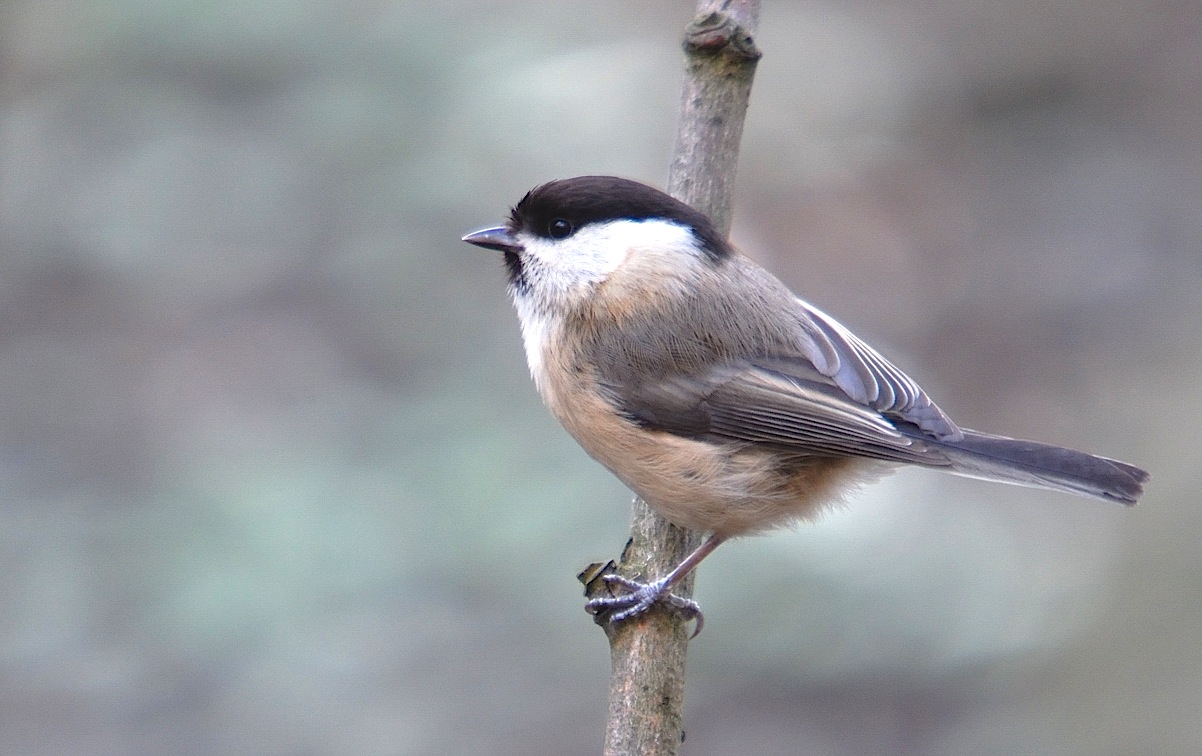
A Willow Tit at Pennington Flash

A Chaffinch singing down Rindle Road

A female Blackbird with a meal for her young

A Sparrow at the bottom of my garden

A Dunnock at Pennington Flash

A Mute Swan on its nest in the canal near Moses Gate

Great Tit at Pennington Flash

Young Blackbird training for the World Cup

Dunnock on a Neighbour's Roof
Subscribe to:
Posts (Atom)