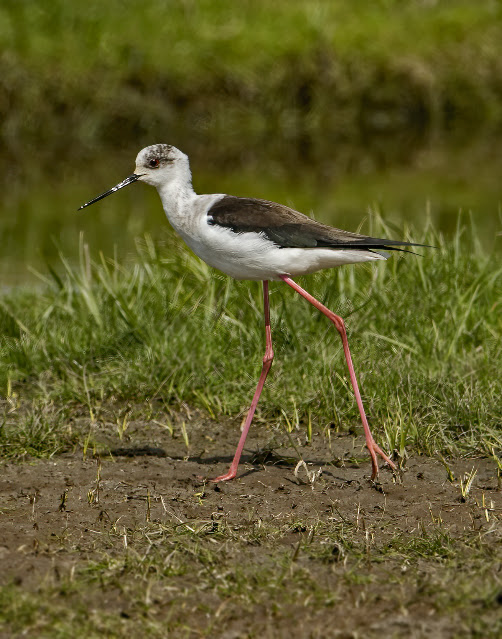
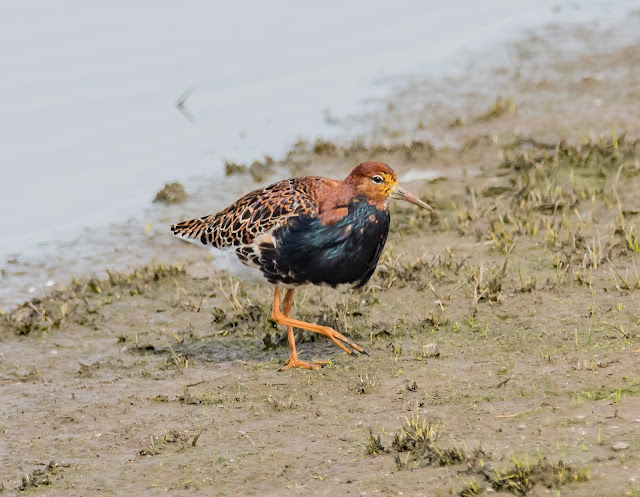
This beautiful juvenile Lesser Yellowlegs has been at Marshside RSPB in South port for the last few days. and I was very pleased to catch up with it today.
Showing posts with label Marshside RSPB. Show all posts
Tuesday, 25 October 2022
Tuesday, 26 April 2022
I wonder how the Black-winged Stilt got it's Name?
The Black-winged Stilt is a bird I've been hoping to see for a few years now and I thought I'd need to go down to Lincolnshire or Norfolk to eventually see one. But success comes to those who wait and as luck would have it, one turned up fairly locally at Marshside RSPB in Southport this week.
ffsgsfgbsfg
dsfgsdfgdsf
sdfgdfsgsdf
sdfgsgdf
dfgfdag
adfgadfg
adfgafdsgf
Labels:
Black-winged Stilt,
Lifer,
Marshside RSPB
Thursday, 23 August 2018
Life's a Beach ...
'Life's a beach', or so they say in that well-known phrase which has been corrupted from a similar phrase which people use when things aren't going so well. Well the beach in question today was Ainsdale Beach near Southport and I was going to approach it from a different direction to my normal route.
I parked up in the small piece of rough ground at the bottom of Weld Road which they laughingly refer to as a car park , having cut though to Birkdale from my journey via Ormskirk to get there. I normally park near the Pontin's Holiday Camp at Ainsdale, but I always seem to end up walking miles before I reach any roosting birds. So today I was hopefully going to take a shorter route.
The high tide was at 10:20am and, after a late start, I only just arrived around that time, when I normally aim to get there for at least an hour before. Not that it mattered today though because, at only 7.3 metres, the tide wasn't ever going to get anywhere near coming in close.


I decided to walk out half a mile or so to the distant tideline, as that's where most of the activity happens and thankfully fro once there was nobody else about to disturb the birds. The forecast was for cloud with the odd sunny spell in the morning followed by rain later in the afternoon - unfortunately it was mostly cloudy so the photos aren't that great.

There were decent numbers of Sanderling and Ringed Plovers about, but not many Dunlin. I saw one Grey Plover in breeding plumage, only five Oystercatchers and the ubiquitous Gulls, mainly Herring and Lesser Black-backed, with the odd Great Black-backed, Common and Black-headed Gull thrown in.
The Cormorants were roosting in their usual spot on the sandbank, and indeed I did reach them much faster than if I[d gone the other way. I think I'll be using this route in the future.
After a couple of hours I noticed that a large area of black cloud had developed over the sea and it seemed to be coming inland. The wind picked up and it started to blow the sand over the beach in a (very) mini sandstorm - time to go I thought.
But just as I was turning to leave a small flock of Sanderling and Dunlin suddenly took off in front of me - I quickly scanned the sky and there was a Peregrine Falcon flying overhead which had obviously spooked them. Now it was time to head back to the car before I got wet.
I'd already decided that I was going to visit Marshside RSPB a little further up the coast as I'd not been for a while and so, after a quick bite to eat, off I drove along the Southport coast road.
To say I was gobsmacked when I saw the state of Marshside today is an understatement. No water at all at Junction Pool, Nel's Hide and Fairclough's Pool and a farmer mowing the grass where the water used to be! I've seen it very low but never like that before.
No birds there then and very few about anywhere else too. Luckily for me half a dozen or so of these gorgeous Black-tailed Godwits saved the day. Most looked they've just recently returned from Iceland. The one below is an adult bird.
With so little about it was nice to spot this Common Sandpiper at Sandgrounder's Hide. It was Ken Morrison who I met outside the hide before I went in who had alerted me to the fact that one of these was here. Thanks Ken!
There were also quite a few Pied Wagtails about, although I did think this one might have been a White Wagtail for a while - apparently not, as the flanks are too grey.
On leaving Sandgrounder's Hide and with Nel's Hide being closed for refurbishment, I had a quick walk around the old sand works. before leaving. This area has been decimated over the last couple of years with most of the area being flattened to return it to being salt marsh again. I really don't know why they want to do this because it used to be a fantastic stopping off pace for migrants such as Wheatear, Whinchats and warblers as well as freshwater drinking spot for Swallows and Martins and the resident Skylarks and Meadow Pipits.

They have put up a rather feeble fence with notices around saying keep dogs on a lead to protect the ground nesting birds are here, particularly Ringed Plovers which use the gravel patches, but I'm afraid these are not going stop anybody wandering around the area and indeed, whilst I was there a dog walker did. It was not really a problem on this occasion as the breeding season is mostly over, but there's not point in fencing off just half the area. Anyway, just as I left for the car this Redshank flew up into the air and over my head.
On the way home I stopped off briefly at Southport Marine Lake where I saw this continental or 'sinensis' race Cormorant. Telling the difference between the various races of these birds is all to do with the angle of the gular pouch you know.
So 'Life is a Beach', well as far as I'm concerned - I just love them.
I parked up in the small piece of rough ground at the bottom of Weld Road which they laughingly refer to as a car park , having cut though to Birkdale from my journey via Ormskirk to get there. I normally park near the Pontin's Holiday Camp at Ainsdale, but I always seem to end up walking miles before I reach any roosting birds. So today I was hopefully going to take a shorter route.
The high tide was at 10:20am and, after a late start, I only just arrived around that time, when I normally aim to get there for at least an hour before. Not that it mattered today though because, at only 7.3 metres, the tide wasn't ever going to get anywhere near coming in close.
I decided to walk out half a mile or so to the distant tideline, as that's where most of the activity happens and thankfully fro once there was nobody else about to disturb the birds. The forecast was for cloud with the odd sunny spell in the morning followed by rain later in the afternoon - unfortunately it was mostly cloudy so the photos aren't that great.
There were decent numbers of Sanderling and Ringed Plovers about, but not many Dunlin. I saw one Grey Plover in breeding plumage, only five Oystercatchers and the ubiquitous Gulls, mainly Herring and Lesser Black-backed, with the odd Great Black-backed, Common and Black-headed Gull thrown in.
The Cormorants were roosting in their usual spot on the sandbank, and indeed I did reach them much faster than if I[d gone the other way. I think I'll be using this route in the future.
After a couple of hours I noticed that a large area of black cloud had developed over the sea and it seemed to be coming inland. The wind picked up and it started to blow the sand over the beach in a (very) mini sandstorm - time to go I thought.
But just as I was turning to leave a small flock of Sanderling and Dunlin suddenly took off in front of me - I quickly scanned the sky and there was a Peregrine Falcon flying overhead which had obviously spooked them. Now it was time to head back to the car before I got wet.
I'd already decided that I was going to visit Marshside RSPB a little further up the coast as I'd not been for a while and so, after a quick bite to eat, off I drove along the Southport coast road.
To say I was gobsmacked when I saw the state of Marshside today is an understatement. No water at all at Junction Pool, Nel's Hide and Fairclough's Pool and a farmer mowing the grass where the water used to be! I've seen it very low but never like that before.
No birds there then and very few about anywhere else too. Luckily for me half a dozen or so of these gorgeous Black-tailed Godwits saved the day. Most looked they've just recently returned from Iceland. The one below is an adult bird.
With so little about it was nice to spot this Common Sandpiper at Sandgrounder's Hide. It was Ken Morrison who I met outside the hide before I went in who had alerted me to the fact that one of these was here. Thanks Ken!
There were also quite a few Pied Wagtails about, although I did think this one might have been a White Wagtail for a while - apparently not, as the flanks are too grey.
On leaving Sandgrounder's Hide and with Nel's Hide being closed for refurbishment, I had a quick walk around the old sand works. before leaving. This area has been decimated over the last couple of years with most of the area being flattened to return it to being salt marsh again. I really don't know why they want to do this because it used to be a fantastic stopping off pace for migrants such as Wheatear, Whinchats and warblers as well as freshwater drinking spot for Swallows and Martins and the resident Skylarks and Meadow Pipits.
They have put up a rather feeble fence with notices around saying keep dogs on a lead to protect the ground nesting birds are here, particularly Ringed Plovers which use the gravel patches, but I'm afraid these are not going stop anybody wandering around the area and indeed, whilst I was there a dog walker did. It was not really a problem on this occasion as the breeding season is mostly over, but there's not point in fencing off just half the area. Anyway, just as I left for the car this Redshank flew up into the air and over my head.
On the way home I stopped off briefly at Southport Marine Lake where I saw this continental or 'sinensis' race Cormorant. Telling the difference between the various races of these birds is all to do with the angle of the gular pouch you know.
Thursday, 18 May 2017
Monday, 31 October 2016
Hesketh Out Marsh and Marshside RSPB
I had a trip out to the Ribble Estuary this afternoon before realising that putting the clocks back on the weekend was going to make it a short visit - the light started dying around 2:30pm but for a brief spell we had golden sunshine and almost no wind. I didn't manage to get many shots as there wasn't that much to see and none of my target birds put in a appearance.
I started by looking for Curlew Sandpiper, American Wigeon and Marsh Harrier at Hesketh Out Marsh. I think I had a brief view of a Merlin as it flew over the car park, but although there were plenty of birds about, none were my targets.
I'd been told that a Curlew Sandpiper was showing in one of the pools, and so I spent a long time looking at a very distant small wader, which in the end turned out to be a late Dunlin, possibly of the Alpina race as it had a long bill.
The only decent shot I got here was this one of a Linnet.
A marvellous charm of Goldfinches briefly appeared on the barbed-wire fence too, but I didn't get a good shot - damn that depth of field thingy!
I then moved on to Crossen's Marsh, north of Marshide RSPB where I got my best photo of the day. These Golden Plovers looked stunning in the dying light - the golden hour was very early today.
Then I went on to Sandgrounders Hide at Marshside RSPB when there was only this Little Grebe and Teal of note.
I did call in at Lunt Meadows on the way home in the hope of seeing at least a Barn Owl, but nothing was showing and light quickly faded.
I started by looking for Curlew Sandpiper, American Wigeon and Marsh Harrier at Hesketh Out Marsh. I think I had a brief view of a Merlin as it flew over the car park, but although there were plenty of birds about, none were my targets.
I'd been told that a Curlew Sandpiper was showing in one of the pools, and so I spent a long time looking at a very distant small wader, which in the end turned out to be a late Dunlin, possibly of the Alpina race as it had a long bill.
The only decent shot I got here was this one of a Linnet.
A marvellous charm of Goldfinches briefly appeared on the barbed-wire fence too, but I didn't get a good shot - damn that depth of field thingy!
I then moved on to Crossen's Marsh, north of Marshide RSPB where I got my best photo of the day. These Golden Plovers looked stunning in the dying light - the golden hour was very early today.
Then I went on to Sandgrounders Hide at Marshside RSPB when there was only this Little Grebe and Teal of note.
I did call in at Lunt Meadows on the way home in the hope of seeing at least a Barn Owl, but nothing was showing and light quickly faded.
Sunday, 11 September 2016
Second Attempt at Using the Campervan
It's been two weeks since my nose job operation and as I've not been anywhere, let alone take any photographs, I've been itching to get out for days now. This also coincided with the fact that I've finally got my campervan working well enough to use and so this week, despite having no confidence in it at all and fully expecting to break down yet again, Sarah and I decided to give it a try. Well, I had paid for membership of the RAC to give me a little more piece of mind if we were to break down.
We started with two day trips out, as well as needing to use the van for a couple of hospital checkup appointments. The first day out was to Marshside RSPB at Southport - no camera, only binoculars and so no photographs I'm afraid, but we did have good close views of a Snipe and several Black-tailed Godwits, as well as more distant views of the long-staying Cattle Egret and quite a few Little Egrets. Apart from these there wasn't really much else about of note, but we has a nice picnic lunch on the car park in the campervan.
Our second trip was to the Wirral, starting at Burton Mere Wetlands RSPB and then driving up to Hoylake for lunch, before finally walking across to Hilbre Island over low tide. This time I did take my camera and some of the landscape shots I took are included in this post.
At Burton Mere Wetlands we had good view of the long-staying Spoonbills, but I could only count eleven when twelve are said to be present. We also had distant views of a Little Stint and closer views of a Green Sandpiper as well as the many usuals which are present in front of the Visitors' Centre. As Hilbre Island was our main target for the day, we only stopped by at the Visitors' Centre area and were soon on our way.
After a quick lunch at King's Gap, Meols in Hoylake where we watching a massive Gull and Oystercatcher roost, we set off for West Kirby where we parked by the side of the Marine Lake after popping into Morrison's to use the toilets.
The walk across to Hilbre Island via the islands of Little Mouse and Middle Mouse takes around an hour, and we had distant views of a large group of Atlantic Seals basking on the sand banks on the way. There really wasn't much bird life around today apart from Gulls of various denominations, but the geology and scenery of the area were fabulous.
As a former geology teacher who has been to Hilbre several times before, I was surprised not to have noticed a classic fault line running through the bedding layers in the red sandstone rocks before. This area would have been great for one of my class's geology field trips with good examples of bedding planes, folds and faults as well as classic coastal erosion geomorphology.
The final trip of the week was an overnight stay in Anglesey, the main reason (apart from being my bird-mobile) for buying the campervan in the first place. It was on this very journey back in November 2014 when I bought the van that all our troubles started. We broke down on our first trip away and had to be recovered home. Following this there were two years of constant problems resulting the fact that we had only ever 'overnighted' in the van once, and that was on that first trip when we broke down.
Since then the van has been constantly in and out of three garages with one repair after another, a saga I'd much rather forget now. So deciding to go for an overnight stay somewhere was quite a big deal given the van's previous history and I decided to go 'light' with as little gear as possible. This meant no cameras, only binoculars and a scope.
Sarah drove the van from our home in Tyldesley to Llandudno where we had a fish supper on the Deganwy side of the Great Orme, overlooking the sandy beach. There were no problems on the way and the van seemed to find a natural speed of 60mph. I then drove it to Anglesey where we parked up in a lay-by which overlooked the sea on the single track road to Penmon. It was dark by the time we arrived, so all there was to do was have a cup of tea and go to bed. It didn't half rain that night and there were lots of gurgling noises as the water found its way down the windows and into gullies and channels designed to shed the water. But we stayed dry and there were no leaks. It was also very windy and the van was buffeted quite a lot as this was a bit of an exposed location. I did wonder if we might get blown into the sea as I fell asleep.
In the morning we awoke to see a beautiful scene, with a rocky beach in the foreground and some of the North Wales mountains in the background. But better still, there was bird life here including three or four squabbling and noisy Grey Herons, at least ten whistling Curlew, many Oystercatchers and Gulls, three or four Rock Pipits, two or three Redshank, at least two Cormorants and best of all, a Sandwich Tern preening itself on a rock. After breakfast we had a short walk across the beach to a picnic area where we met a lovely lady with her dog and had a chat. On this walk which was bordered by gardens with some tall conifers and other trees we saw a Great Spotted Woodpecker, a charm of about fifty Goldfinches and a lone Wheatear. I think I also heard a Stonechat and a Robin, but I didn't see them.
The main target for today was to walk to Llanddwyn Island near Newborough, and so we were soon on the road a heading for the main car park at Newborough Warren. However, as we approached Newborough we thought we'd take a look at another small parking area which we'd visited with our two children many years ago when we had a caravan at Plas Coch (before it got to be a country club for the rich and famous). The car park was packed, but luckily there was just enough room to park the campervan there and there was even a bird hide overlooking a small lake here - I never knew that! On the lake there were many Coot and a few Moorhens, but the stars here were the male and female Gadwall which looked stunning. After a while three Little Grebes appeared and later, a couple of Mute Swans.
After some discussion, Sarah and I decided that we could walk to Newborough beach and on to Llanddwyn Island from here - it would be twice as long but it was a free car park and a sunny day, so we went for it. It turned out to be a bit of a trek for me however as I'd recently hurt my leg in a fall whilst gardening. It wasn't a problem at first, but I really felt it on the way back.
With its broad sweeping stretch of golden sands backed by shifting sand dunes and a Forestry Commission conifer plantation, the beach at Newborough has to be one of the finest beaches in the UK. We'd been canoeing here a couple of times when the children were younger and I was longing for those days again. I really wanted to go in the sea, but my gammy leg and lack of suitable attire prevented me, so I just had to think about returning soon - as soon as possible.
On our walk along the beach we stopped at the classic 'pillow lava' structures at the northern end, just before you cross over to Llanddwyn Island. The geology teacher in me was revived for a second time this week as I marvelled at the shapes and considered their age in millions of years. There are five main places to visit on the Island: the ruined church, the celtic cross, the cottages with a cannon outside, the two lighthouses and the stone cross - we touched all of them bar one of the lighthouses.
Whilst on the Island I saw a male Stonechat and Sarah saw another which was probably the female. There were many Cormorants perched on the rocky outcrops just off the edge of the Island and a few Gulls here and there. What a fabulous place this is with it's sandy coves and rock formations. The view back over Snowdonia is stunning and the sea is a beautiful green blue.
As I previously mentioned, the 3.5 mile walk back to the campervan was a bit of a trek for me and I soon started flagging. This was helped by an ice-cream and drink of pop when we reached the main Newborough car park, but we still had over a mile to go to get back to the van. However the journey was made easier with the sight of several large Ravens cronking on their return to roost in the conifers.
We walked just over seven miles in total on a lovely sunny day whilst thinking that we really mustn't leave it so long before we return once again. The only photos I've got were taken on Sarah's iPhone - they'll have to do for now, but I'll be back with my proper camera gear before long - can't wait!
We started with two day trips out, as well as needing to use the van for a couple of hospital checkup appointments. The first day out was to Marshside RSPB at Southport - no camera, only binoculars and so no photographs I'm afraid, but we did have good close views of a Snipe and several Black-tailed Godwits, as well as more distant views of the long-staying Cattle Egret and quite a few Little Egrets. Apart from these there wasn't really much else about of note, but we has a nice picnic lunch on the car park in the campervan.
Our second trip was to the Wirral, starting at Burton Mere Wetlands RSPB and then driving up to Hoylake for lunch, before finally walking across to Hilbre Island over low tide. This time I did take my camera and some of the landscape shots I took are included in this post.
At Burton Mere Wetlands we had good view of the long-staying Spoonbills, but I could only count eleven when twelve are said to be present. We also had distant views of a Little Stint and closer views of a Green Sandpiper as well as the many usuals which are present in front of the Visitors' Centre. As Hilbre Island was our main target for the day, we only stopped by at the Visitors' Centre area and were soon on our way.
After a quick lunch at King's Gap, Meols in Hoylake where we watching a massive Gull and Oystercatcher roost, we set off for West Kirby where we parked by the side of the Marine Lake after popping into Morrison's to use the toilets.
The walk across to Hilbre Island via the islands of Little Mouse and Middle Mouse takes around an hour, and we had distant views of a large group of Atlantic Seals basking on the sand banks on the way. There really wasn't much bird life around today apart from Gulls of various denominations, but the geology and scenery of the area were fabulous.
As a former geology teacher who has been to Hilbre several times before, I was surprised not to have noticed a classic fault line running through the bedding layers in the red sandstone rocks before. This area would have been great for one of my class's geology field trips with good examples of bedding planes, folds and faults as well as classic coastal erosion geomorphology.
The final trip of the week was an overnight stay in Anglesey, the main reason (apart from being my bird-mobile) for buying the campervan in the first place. It was on this very journey back in November 2014 when I bought the van that all our troubles started. We broke down on our first trip away and had to be recovered home. Following this there were two years of constant problems resulting the fact that we had only ever 'overnighted' in the van once, and that was on that first trip when we broke down.
Since then the van has been constantly in and out of three garages with one repair after another, a saga I'd much rather forget now. So deciding to go for an overnight stay somewhere was quite a big deal given the van's previous history and I decided to go 'light' with as little gear as possible. This meant no cameras, only binoculars and a scope.
Sarah drove the van from our home in Tyldesley to Llandudno where we had a fish supper on the Deganwy side of the Great Orme, overlooking the sandy beach. There were no problems on the way and the van seemed to find a natural speed of 60mph. I then drove it to Anglesey where we parked up in a lay-by which overlooked the sea on the single track road to Penmon. It was dark by the time we arrived, so all there was to do was have a cup of tea and go to bed. It didn't half rain that night and there were lots of gurgling noises as the water found its way down the windows and into gullies and channels designed to shed the water. But we stayed dry and there were no leaks. It was also very windy and the van was buffeted quite a lot as this was a bit of an exposed location. I did wonder if we might get blown into the sea as I fell asleep.
In the morning we awoke to see a beautiful scene, with a rocky beach in the foreground and some of the North Wales mountains in the background. But better still, there was bird life here including three or four squabbling and noisy Grey Herons, at least ten whistling Curlew, many Oystercatchers and Gulls, three or four Rock Pipits, two or three Redshank, at least two Cormorants and best of all, a Sandwich Tern preening itself on a rock. After breakfast we had a short walk across the beach to a picnic area where we met a lovely lady with her dog and had a chat. On this walk which was bordered by gardens with some tall conifers and other trees we saw a Great Spotted Woodpecker, a charm of about fifty Goldfinches and a lone Wheatear. I think I also heard a Stonechat and a Robin, but I didn't see them.
The main target for today was to walk to Llanddwyn Island near Newborough, and so we were soon on the road a heading for the main car park at Newborough Warren. However, as we approached Newborough we thought we'd take a look at another small parking area which we'd visited with our two children many years ago when we had a caravan at Plas Coch (before it got to be a country club for the rich and famous). The car park was packed, but luckily there was just enough room to park the campervan there and there was even a bird hide overlooking a small lake here - I never knew that! On the lake there were many Coot and a few Moorhens, but the stars here were the male and female Gadwall which looked stunning. After a while three Little Grebes appeared and later, a couple of Mute Swans.
After some discussion, Sarah and I decided that we could walk to Newborough beach and on to Llanddwyn Island from here - it would be twice as long but it was a free car park and a sunny day, so we went for it. It turned out to be a bit of a trek for me however as I'd recently hurt my leg in a fall whilst gardening. It wasn't a problem at first, but I really felt it on the way back.
With its broad sweeping stretch of golden sands backed by shifting sand dunes and a Forestry Commission conifer plantation, the beach at Newborough has to be one of the finest beaches in the UK. We'd been canoeing here a couple of times when the children were younger and I was longing for those days again. I really wanted to go in the sea, but my gammy leg and lack of suitable attire prevented me, so I just had to think about returning soon - as soon as possible.
On our walk along the beach we stopped at the classic 'pillow lava' structures at the northern end, just before you cross over to Llanddwyn Island. The geology teacher in me was revived for a second time this week as I marvelled at the shapes and considered their age in millions of years. There are five main places to visit on the Island: the ruined church, the celtic cross, the cottages with a cannon outside, the two lighthouses and the stone cross - we touched all of them bar one of the lighthouses.
Whilst on the Island I saw a male Stonechat and Sarah saw another which was probably the female. There were many Cormorants perched on the rocky outcrops just off the edge of the Island and a few Gulls here and there. What a fabulous place this is with it's sandy coves and rock formations. The view back over Snowdonia is stunning and the sea is a beautiful green blue.
As I previously mentioned, the 3.5 mile walk back to the campervan was a bit of a trek for me and I soon started flagging. This was helped by an ice-cream and drink of pop when we reached the main Newborough car park, but we still had over a mile to go to get back to the van. However the journey was made easier with the sight of several large Ravens cronking on their return to roost in the conifers.
We walked just over seven miles in total on a lovely sunny day whilst thinking that we really mustn't leave it so long before we return once again. The only photos I've got were taken on Sarah's iPhone - they'll have to do for now, but I'll be back with my proper camera gear before long - can't wait!
Labels:
Anglesey,
Hilbre Island,
Llanddwyn Island,
Marshside RSPB,
Newborough,
Wirral
Subscribe to:
Posts (Atom)